
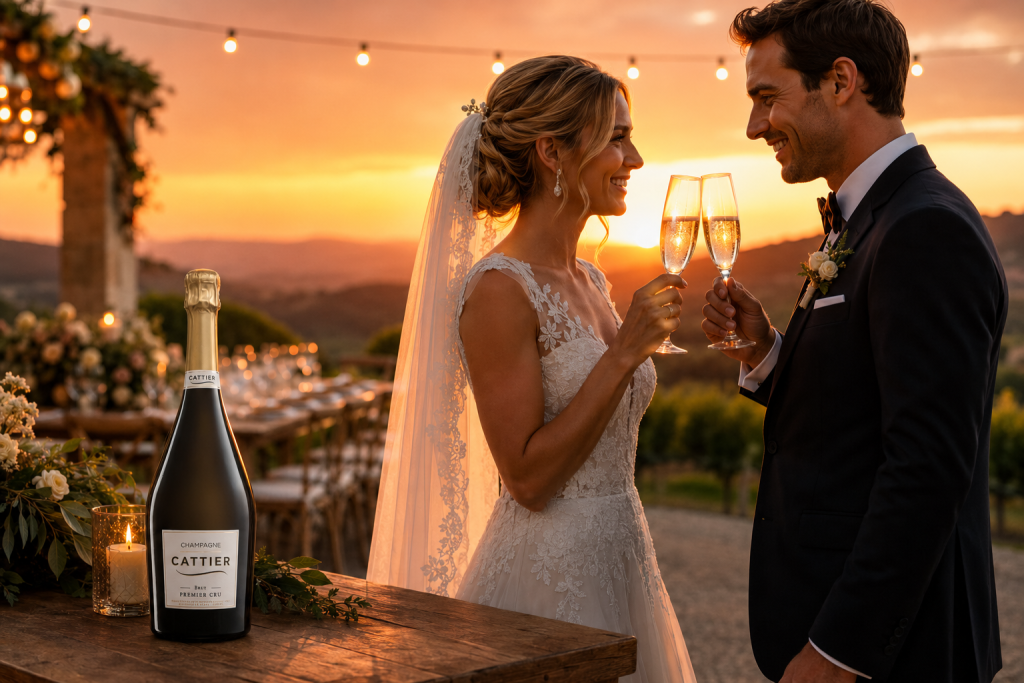
If you’re lucky enough to be attending a wedding this summer, chances are you’ll spend at least part of the day with a glass of Champagne in your hand.
For many couples, choosing that Champagne has become almost as important as choosing the flowers or the menu. More and more are looking beyond the familiar global brands in search of something that feels a little more personal – a wine with a genuine family story behind it.
That’s perhaps why Champagne Cattier has become an increasingly popular choice.
In the UK you’ll currently find the range exclusively through Majestic Wine, making it one of those rare Champagnes that’s readily available but still feels like something of a discovery. And when you scratch beneath the surface, it’s easy to understand why.
After all, every wedding tells a family story. It somehow feels fitting that the Champagne in your glass should do the same.
Four Hundred Years in the Making

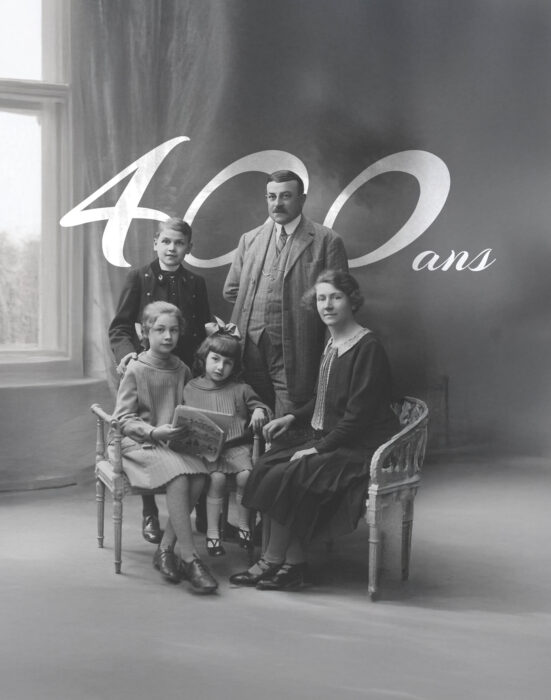
The story begins in the Premier Cru village of Chigny-les-Roses, nestled amongst the rolling vineyards of the Montagne de Reims.
The Cattier family have been growing vines here since 1625, making them one of the oldest continuously working wine-growing families in Champagne. For generations they followed the traditional path, cultivating exceptional fruit for many of the famous Champagne Houses whose names became recognised around the world.
It would take one of the darkest periods in European history to change that.
Returning home badly wounded after the First World War, Jean Cattier faced a future very different from the one he had imagined. Determined to protect both his family and their livelihood during an uncertain time, he made the courageous decision to stop selling grapes and instead create Champagne under the family name.
In 1918, the first bottles of Champagne Cattier were born.
More than a century later, that decision continues to shape the House today.
Beneath the Vineyards
Walk around the family estate and it’s difficult to imagine what lies beneath your feet.
Hidden below the vineyards are some of the deepest cellars in Champagne, descending almost thirty metres into the chalk. As you make your way down the 119 steps, the architecture changes around you – Roman arches giving way to Gothic stonework before Renaissance brickwork takes over. Each generation has literally built upon the work of the last.
It’s here, in the cool stillness of these remarkable cellars, that Cattier’s Champagnes quietly mature for more than four years. That’s considerably longer than the legal minimum and one of the reasons the wines develop such wonderful depth, texture and those gently toasty brioche notes that make them so enjoyable at the table.
Above ground lies another treasure.
The Clos du Moulin is one of Champagne’s rare walled vineyards and the second oldest in the entire region. It’s a tiny 2.2-hectare site acquired by the family in 1950. Protected by its walls and blessed with its own unique microclimate, it produces some of the House’s most sought-after wines and remains a wonderful example of how place can shape personality in Champagne.
A Family Still at the Helm

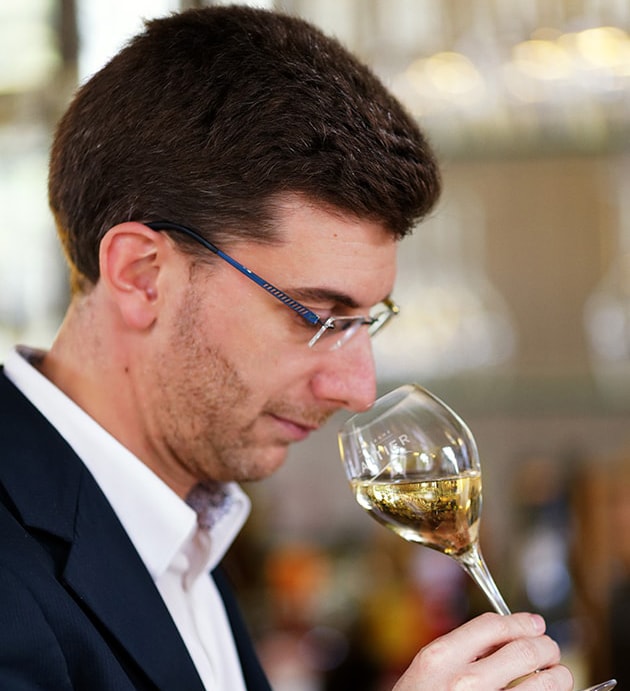
Today, the House is led by its thirteenth generation, with Alexandre Cattier combining the increasingly rare roles of both owner and head winemaker.
His approach is refreshingly straightforward. Rather than relying on oak barrels to add flavour, Alexandre prefers to preserve the natural purity of the fruit, allowing the Pinot Noir, Pinot Meunier and Chardonnay to express the chalk-rich soils from which they come. The result is Champagne that feels precise, elegant and beautifully balanced, with freshness always at its heart.
It’s a philosophy that reflects the family itself: respectful of tradition but never afraid to look forward.
Why Cattier Champagne Works So Well at Weddings
I’ve always thought the best wedding Champagnes are those that encourage conversation.
Yes, they need to taste wonderful, but they should also have a story worth sharing. Somewhere between the speeches, the photographs and the dancing, someone will almost certainly ask, “What Champagne is this?”
With Cattier, there’s a rather lovely answer.
It’s the story of thirteen generations of one family, of vineyards cared for over four centuries, of deep chalk cellars hidden beneath the landscape and of a wounded soldier who chose to create something lasting rather than simply sell his grapes.
Those stories somehow seem entirely appropriate on a day that’s all about bringing families together and beginning a new chapter.
Perhaps that’s why independent Champagne Houses continue to grow in popularity. They offer something increasingly difficult to find in today’s world: authenticity.
So when the glasses are finally raised this summer, it may be worth looking beyond the biggest names.
Because sometimes the most memorable wedding toast isn’t simply about what’s in the glass.
It’s about the story that comes with it.