
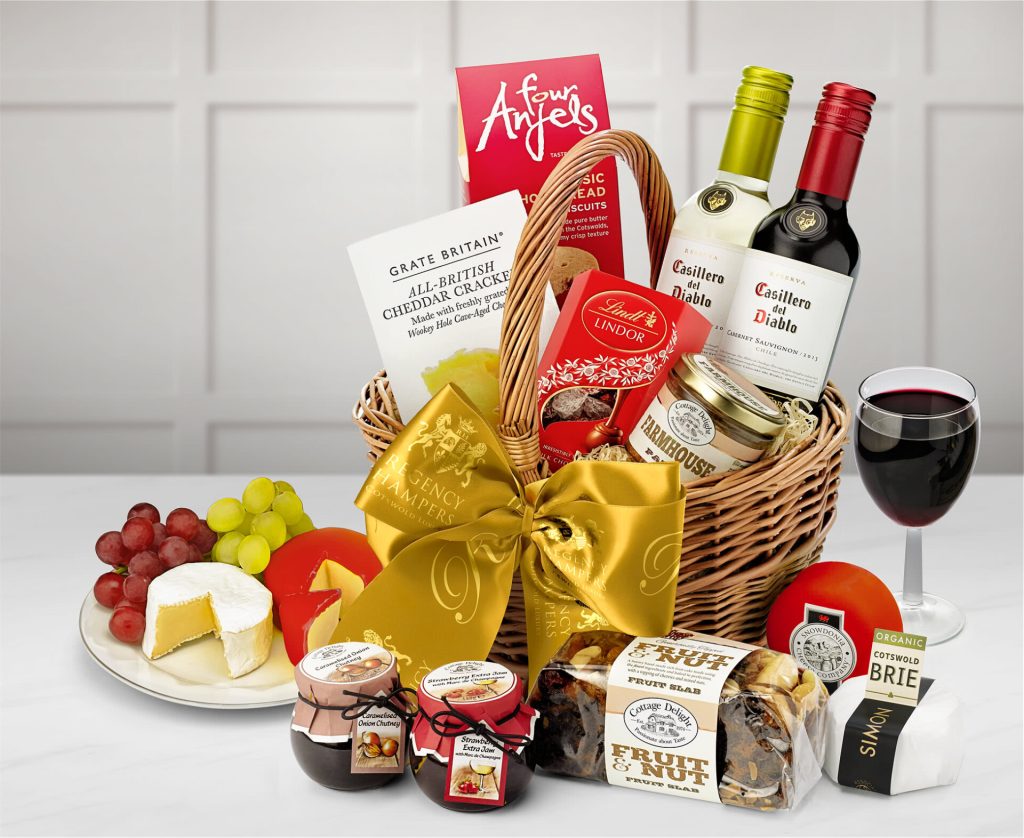
Few gifts feel as instantly recognisable as a British hamper. Filled with cheese, biscuits, preserves, wine, chocolate or festive favourites, a hamper carries a sense of occasion before it is even opened. Part food gift, part celebration, part carefully packed surprise, it has moved from a practical picnic basket to one of Britain’s most enduring ways to send something thoughtful.
What makes the hamper so resilient? It has survived changing shopping habits, same-day delivery and supermarket convenience. It has outlasted trends, faddy gifting concepts and the general human instinct to find something newer. The reason is straightforward: a hamper combines food, presentation, variety and occasion into a single gesture – and very few gift formats manage all four at once.
The practical origins of the hamper
Long before food hampers were wrapped for Christmas or sent as corporate gifts, they had a practical role. Wicker baskets were sturdy, reusable and well suited to carrying food and drink – especially for journeys, picnics and household provisions. That breathable, lightweight design helped shape the way hampers are still understood today: a collection of good things, packed together with care.
The classic wicker basket became particularly associated with outdoor eating and countryside leisure. Its format naturally suited mixed food items and that same logic applies today. A hamper is not built around a single product. It is built around variety – which is precisely what makes it feel generous.
How hampers became associated with celebration
The transition from practical container to cherished gift happened because hampers naturally suggest abundance. A single bottle of wine may be appreciated and a box of chocolates may be enjoyed, but a hamper creates a small moment of discovery. Each item adds to the sense of care: something savoury, something sweet, something to share, something to save for later.
Food is inherently social. A hamper tends to become part of a gathering – opened at Christmas, passed around at a celebration, enjoyed with tea after a housewarming visit. That shareable quality made gift hampers a natural fit for festive rituals and special occasions: Christmas gifting, wedding presents, thank-you gestures and corporate gifting at year’s end.
They also occupy a useful emotional space. A hamper feels personal without being too intimate. It is luxurious without overstepping. That balance is surprisingly hard to achieve in gift-giving and it is one of the main reasons hampers have remained popular across generations.
The role of British food traditions
Part of the hamper’s enduring appeal is how well it suits the rhythm of British food culture. Tea, biscuits, preserves, cheese, chutney, crackers and festive treats all lend themselves to sharing. They are not just products on a shelf; they belong to rituals – afternoon tea, Christmas visits, family gatherings, picnics, cosy evenings and thank-you moments.
There is also a regional dimension worth noting. A well-chosen hamper can tell a story of place: Scottish shortbread, English preserves, Welsh produce, Cotswolds cheeses or artisan ales from a local brewery. Regional provenance adds character to a hamper in a way that generic gifts rarely achieve. It signals that some thought went into the selection – not just into the presentation.
Why hampers still work in modern gifting
Modern gifting is full of small traps. Clothes may not fit. Homeware may clash with the recipient’s taste. Novelty gifts have a tendency to become drawer clutter before the month is out. Food gifts avoid much of that awkwardness. They are useful, enjoyable and designed to be consumed – which makes the hamper particularly resilient as a gift format.
A hamper also works across a wide range of recipients: an individual, a couple, a family, a team. It can be enjoyed immediately or saved for a later occasion. It can be delivered directly to a doorstep, which makes it especially practical for remote gifting. And it feels more considered than a voucher, without requiring the sender to guess personal taste with precision.
From quantity to curation: the modern premium hamper
The best modern hampers are curated rather than simply filled. Volume alone is not the measure of quality. What matters is whether the items work together – whether the selection has rhythm and balance.
A thoughtful hamper curated by Regency Hampers, Fortnum & Mason or other luxury supplier might pair cheese, crackers and chutney in a way that makes sense. It might include tea, biscuits and a good preserve alongside something indulgent. Sweet and savoury items should complement each other and the overall selection should feel complete without being excessive.
Presentation and packaging are equally important. The arrangement inside the basket or box, the tissue paper, the ribbon, the layout – all of it contributes to how the gift is received. Premium brands and artisan products both have a role to play, as do dietary-aware options. Alcohol-free hampers, vegan selections and gluten-free alternatives have moved from niche to expected and a quality hamper range reflects that.
The importance of presentation and unboxing
A hamper is judged before anything is tasted. The way it arrives, opens and presents itself matters because gifting is emotional as well as practical. When the sender cannot hand the gift over in person, the packaging has to do some of that work – creating surprise, showing care and making the recipient feel remembered.
This is especially true of deliveries. The outer box, the inner arrangement and the personal message (if included) combine to form a first impression that the food itself then has to live up to. A hamper that arrives looking considered already feels like a success before the first item is unwrapped.
Hampers as corporate gifts
Hampers have remained popular in corporate gifting because they occupy a useful middle ground. A well-chosen food hamper feels more considered than a standard branded item, but is still appropriate for a wide range of recipients. It can be shared by a household or team, which makes it a practical way to say thank you without needing to know someone’s exact personal taste.
For clients, employees and partners, the format works across multiple occasions: Christmas, deal completions, project milestones, team appreciation and onboarding. Presentation and delivery reliability matter more in a corporate context, since the hamper reflects directly on the sender. A polished, carefully selected gift says something about the organisation behind it.
Choosing the right hamper for the occasion
Choosing a hamper becomes easier when you start with the recipient rather than the basket. A few considerations help narrow it down:
- Occasion: Christmas, birthday, thank-you, new home, corporate, sympathy – each has a different tone.
- Recipient: Individual, couple, family, team or client – the right selection varies significantly.
- Dietary needs: Vegetarian, vegan, gluten-free and alcohol-free options are increasingly important.
- Balance: Sweet and savoury, drinks and snacks, indulgent and practical items.
- Shelf life: Consider whether fresh or longer-lasting items better suit the situation.
- Budget: A small, thoughtful gift can work just as well as a premium centrepiece, if it is well chosen.
- Delivery: Named-day delivery, remote gifting and seasonal cut-off dates all need to be factored in.
The right hamper is not always the largest one. It is the one that best matches the moment.
Why the hamper keeps evolving
The hamper has endured because it can change without losing its identity. A traditional Christmas basket, a vegan food selection, a wine-and-cheese gift, an alcohol-free treat box and a corporate thank-you hamper may look quite different from each other – but they share the same basic promise: a carefully chosen collection of food and drink, presented as an occasion.
Sustainable packaging, regional provenance, online ordering and direct delivery have all become part of how modern hampers are made and sent. The format is traditional, but flexible. That flexibility is what keeps it relevant.
A traditional gift that still earns its place
The British hamper has lasted because it offers something simple but surprisingly hard to replace: abundance, care and the pleasure of sharing good food.
From its origins as a practical wicker basket to its modern role as a curated premium gift, the hamper continues to work because it turns everyday food and drink into a moment of occasion. Gifting has become more complex, more impersonal and more convenient – but the hamper has kept its place precisely because it resists all three of those tendencies. It asks the sender to think a little and rewards the recipient with something worth opening slowly.