
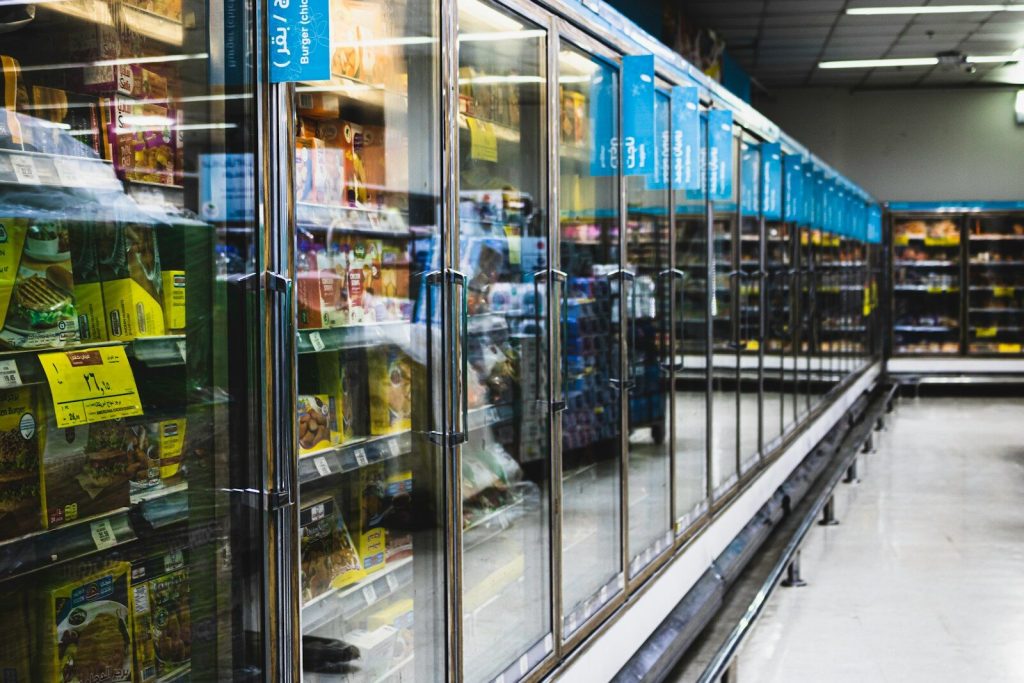
Cyberattacks targeting commercial fridges and freezers have affected food businesses in the UK and across Europe, highlighting how weaknesses in connected equipment can disrupt food supplies and create costly losses.
The latest incidents, reported on 2 November, follow attacks on French supermarkets in October. Retailers in countries including Ireland, Sweden and Belgium reported interference with refrigeration systems, with some removing chilled and frozen products from sale.
UK meat processing businesses have also been affected. On 3 November, the National Cyber Security Centre (NCSC) said it was working with affected organisations and described the national impact as minimal. The full extent of the incidents remains under investigation.
What Is Being Hacked?
The incidents concern the connected controllers used to monitor and manage commercial refrigeration equipment. These systems allow engineers to check temperatures, change settings and carry out maintenance remotely.
When poorly secured, that remote access can provide an opportunity for attackers to interfere with cooling settings or defrost schedules.
France’s cybersecurity response service, CERT-FR, has identified compromises affecting controllers in the Danfoss AK-SM and AK-SC ranges, alongside Copeland XWEB and Dixell XWEB equipment. Its alert warns against exposing management interfaces directly to the internet and recommends protected connections, security updates and changes to default passwords.
In Britain, The Grocer reported that several meat suppliers had experienced interference with refrigeration systems. One reported equipment being set to defrost hourly.
However, an altered controller setting does not establish that food reached that temperature. Businesses must assess actual temperature exposure and reliable monitoring records before deciding whether products remain safe.
What Does the UK’s Cybersecurity Centre Say?
The NCSC has highlighted refrigeration as an example of the wider risks facing technology that controls physical processes.
In a speech published on 3 November, chief executive Dr Richard Horne warned:
“Our resulting exposure as a society is huge and increasingly exploited in cyber attacks as we are seeing in the disruption of refrigeration units across Europe.”
The incidents underline a practical challenge for food businesses: refrigeration equipment needs cybersecurity maintenance throughout its working life, alongside mechanical servicing.
Advice for Retailers and Food Businesses
Retailers, wholesalers and food processors should review their systems with their refrigeration contractor and IT or cybersecurity provider.
Identify every connected controller. Establish which equipment is installed, who manages it, how remote access works and whether the manufacturer still supplies security updates. Include cold rooms, warehouses and equipment maintained by external contractors.
Remove direct internet access to management controls. CERT-FR recommends restoring remote access through a secure VPN or protected network. Changes should be coordinated with refrigeration engineers so essential monitoring and alarms continue to function.
Install supported security updates. Check manufacturer notices and arrange updates safely. Unsupported controllers need a replacement or isolation plan: a factory reset alone will not remove an underlying vulnerability.
Review passwords and contractor access. Replace default or shared credentials, remove unnecessary accounts and use multifactor authentication where supported.
These measures reflect the protective actions set out in CERT-FR’s refrigeration alert.
Businesses should also consider independent temperature monitoring and alerts, so staff can detect abnormal conditions without relying entirely on the controller being protected.
If interference is suspected, involve the refrigeration contractor, cybersecurity team and food safety lead immediately. Preserve available logs, place potentially affected stock on hold and assess its temperature history before releasing it for sale. Restoring the equipment does not, by itself, establish that the food is safe.
Should Consumers Worry About Their Fridge at Home?
The reported incidents concern commercial refrigeration systems. They do not establish that ordinary household smart fridges are being targeted in the same campaign.
Nevertheless, internet-connected household appliances need protection. In its guidance on smart devices, the NCSC explicitly includes fridges among the everyday products that can connect to home networks.
Its advice is clear:
“If the device comes with a default password, change it.”
The centre also states:
“Installing software updates promptly helps keep your devices secure.”
Consumers should enable automatic updates where available, use a strong, unique password and turn on two-step verification for the associated account if offered.
The NCSC also recommends switching off remote access if it is unnecessary and checking how long the manufacturer will provide security support. Before buying a connected fridge, shoppers should consider whether that support period matches how long they expect to keep the appliance.
What If Your Fridge Becomes Unusually Warm?
An unexpected temperature change can have several causes, including an ordinary mechanical fault. Check the appliance with a separate thermometer and contact the manufacturer or a qualified engineer.
Food Standards Agency guidance recommends keeping a domestic fridge between 0°C and 5°C, with a freezer around −18°C. If food has become warm and its storage history is uncertain, seek food safety advice rather than assuming that cooling it again makes it safe.
If a connected appliance appears compromised, follow the manufacturer’s recovery instructions. The NCSC recommends a manufacturer-guided reset where someone is believed to have taken control of a household device. Arrange safe food storage before taking any action that could interrupt cooling.
Sources/References
- ITV News — UK incidents and NCSC response:
https://www.itv.com/news/2026-11-03/uk-meat-processing-firms-hit-amid-fridge-and-freezer-cyber-attacks - Sky News — European refrigeration attacks:
https://news.sky.com/story/hackers-target-refrigerators-in-ireland-and-european-countries-in-new-wave-of-cyber-attacks-13607013 - The Grocer — UK meat suppliers affected:
https://www.thegrocer.co.uk/news/meat-suppliers-hacked-in-latest-round-of-fridge-cyberattacks/725432.article - CERT-FR — Refrigeration controller security alert:
https://www.cert.cyber.gouv.fr/alerte/CERTFR-2026-ALE-012/ - NCSC — Richard Horne’s Annual Review 2026 speech:
https://www.ncsc.gov.uk/speech/richard-hornes-speech-at-the-ncsc-annual-review-2026-launch - NCSC — Smart devices: using them safely in your home:
https://www.ncsc.gov.uk/guidance/smart-devices-in-the-home - Food Standards Agency guidance — Safe chilling and freezing:
https://www.gov.uk/government/publications/how-to-chill-freeze-and-defrost-food-safely/how-to-chill-freeze-and-defrost-food-safely