
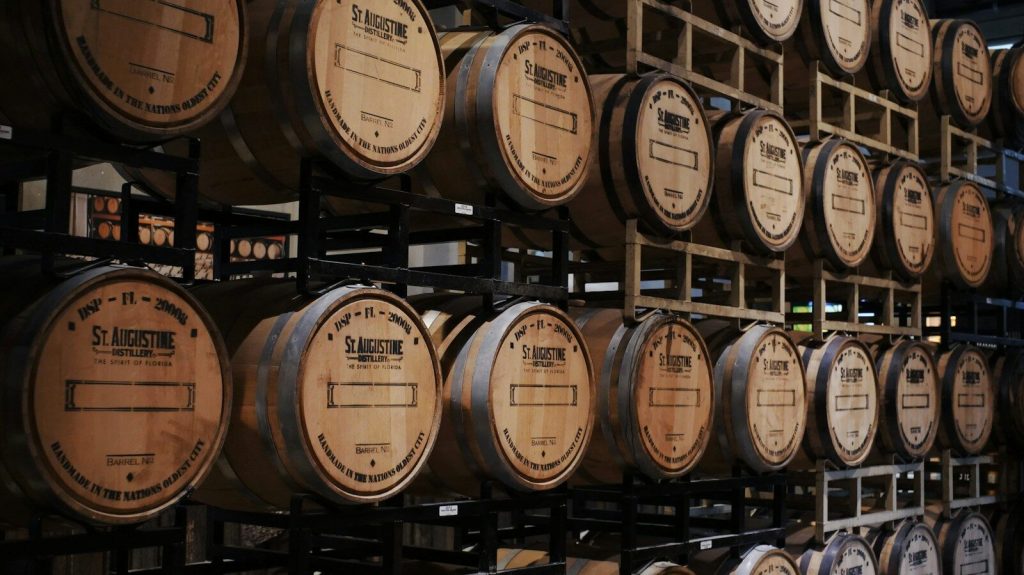
Most of us meet whisky at the end of its life. It arrives in a bottle, already decided, already named, already priced. Someone else chose the cask, judged when it was ready, and decided how it would taste.
There is a whole stage before that, and a growing number of people are buying into it. Not a bottle, but the cask itself, sitting in a bonded warehouse in Scotland, quietly changing.
It sounds like something reserved for the trade. In practice it is more accessible than most drinkers assume, and considerably less glamorous than it sounds.
How a whisky cask shapes the whisky inside it
A new make spirit leaving a still is clear, sharp and not especially pleasant. Everything people love about Scotch, the colour, the vanilla, the dried fruit, the spice, comes from the wood it rests in and the years it spends there.
That is why the cask matters more than almost any other decision. A first-fill bourbon barrel gives a different result to a refill hogshead. A sherry butt that previously held oloroso gives a different result again. The size of the cask changes the pace, because a smaller cask puts more wood in contact with less liquid, so it matures faster.
Owning a cask means owning that process rather than its outcome. You are not buying a flavour. You are buying the conditions in which a flavour will develop, and then waiting.
How long whisky cask maturation actually takes
Scotch has to spend a minimum of three years in oak to be called Scotch at all. In reality, most casks worth bottling are left considerably longer, and the interesting ones are left longer still.
There is no way to speed this up, and no way to check in meaningfully week to week. The whisky is in a warehouse you do not visit daily, losing a little volume each year to evaporation through the wood. The industry calls this the angel’s share, which is a romantic name for roughly two per cent of your liquid disappearing annually.
For anyone used to buying a bottle and opening it that evening, this is a genuine adjustment. The pleasure is slower and more abstract. You are custodian of something unfinished.
Why a whisky cask has to sit in bonded storage
A cask cannot simply go in a garage. Whisky maturing in Scotland sits under bond, in a warehouse licensed and monitored for the purpose, with duty and VAT deferred for as long as the spirit stays there.
This is not a technicality, it is the whole legal structure. Bonded storage is what keeps the whisky classed as maturing stock rather than a purchase you have taken delivery of. It also means the practical business of owning a cask involves paperwork, insurance and storage arrangements rather than anything you handle yourself.
At Spiritfilled we run our own bonded warehouse in Scotland, Braeside Bond, which is partly a practical matter and partly a matter of knowing exactly where our customers’ casks are and who is looking after them.
What happens when a cask is ready for bottling
Here is where cask ownership turns from passive to interesting. At some point a cask is ready, and someone has to decide what happens to it.
It can be bottled under your own label, which is how a surprising number of independent bottlings begin. It can be sold on as a cask. It can be left longer, if the whisky is still improving and you have the patience.
The bottling route involves more decisions than people expect, including strength, filtration, bottle count and labelling, and we have written a fuller guide to bottling a whisky cask for beginners for anyone weighing it up.
Independent bottling is the part that tends to surprise people. The bottle on the shelf with an unfamiliar name and a very specific distillery pedigree often started as someone’s single cask. We release rare single casks under our own label, Mythical Beasts, and the appeal is exactly that each one is finite. When it is gone, that particular combination of distillery, cask and year does not come back.
Who whisky cask ownership actually suits
Cask ownership rewards a particular temperament. It suits people who find the process as interesting as the product, who are comfortable not having something to show for several years, and who like the idea of owning something physical and specific rather than generic.
It suits less well anyone who wants quick access to good whisky. If that is the aim, a well chosen bottle is faster, cheaper and immediately enjoyable.
For readers who want to understand the practical side in more depth, including how casks are sourced, stored and eventually exited, our guide to whisky cask investment covers how the whole arrangement works.
Worth saying plainly: whisky casks are not a regulated financial product, and nobody can tell you what a cask will be worth years from now. Anyone who does is guessing. The sensible way to approach it is as something you want to own, with the possibility of value as a secondary consideration rather than the point.
How owning a cask changes the way you drink Scotch
What draws most people in, in our experience, is not the money. It is the shift in perspective.
Once you have owned a cask, you read a label differently. You notice the cask type, the year, the bottling strength. You understand why two whiskies from the same distillery taste nothing alike. You stop thinking of whisky as a finished object and start seeing it as something that was made, slowly, by decisions.
That is available to far more people than it used to be. It just requires the one thing modern drinking culture is worst at, which is being willing to wait.