Finding greener ways to enjoy your favourite dairy drinks
The way you pour your morning cuppa or blend your post-work smoothie might seem like a small thing. Yet dairy drinks sit right in the middle of bigger conversations about food, farming, and sustainability in the UK. More and more people (rightfully so!) are paying closer attention to where their milk comes from and how it’s produced. The good news? You don’t have to give up your favourites to make smarter, greener choices.
Making dairy drinks more sustainable
Traditional dairy has a larger environmental footprint than many people realise. Cows need land, water, and feed, and all of that adds up in emissions and resource use. That doesn’t mean dairy is off the table per se, but it shifts the focus to how it’s produced and how you choose it.
One of the easiest ways to reduce your impact is to look closer to home. Milk produced locally travels fewer miles and often comes from farms with clearer welfare standards. Smaller or independent dairies can be more transparent about their practices too, which makes it easier to support producers doing things well. Packaging plays a role as well. Plastic bottles are convenient, but they contribute to waste if they’re not reused or recycled properly. Glass, refill schemes, and larger formats can all cut down what ends up in the bin.
Once you start thinking this way, it naturally opens the door to trying different options altogether. That might mean exploring plant-based alternatives, or simply paying more attention to where and how you source your regular milk.
Choosing where and which milk to get
Where you buy your milk often matters just as much as what you buy. Supermarkets dominate, but they’re not your only option, and they don’t always offer the lowest-impact choice.
Local sourcing stands out straight away. Farm shops and farmers’ markets give you direct access to producers, which means fewer steps between the field and your fridge. You can ask questions, learn how the milk is handled, and feel more confident about what you’re supporting! There’s also a stronger sense of accountability when the people behind the product are right in front of you.
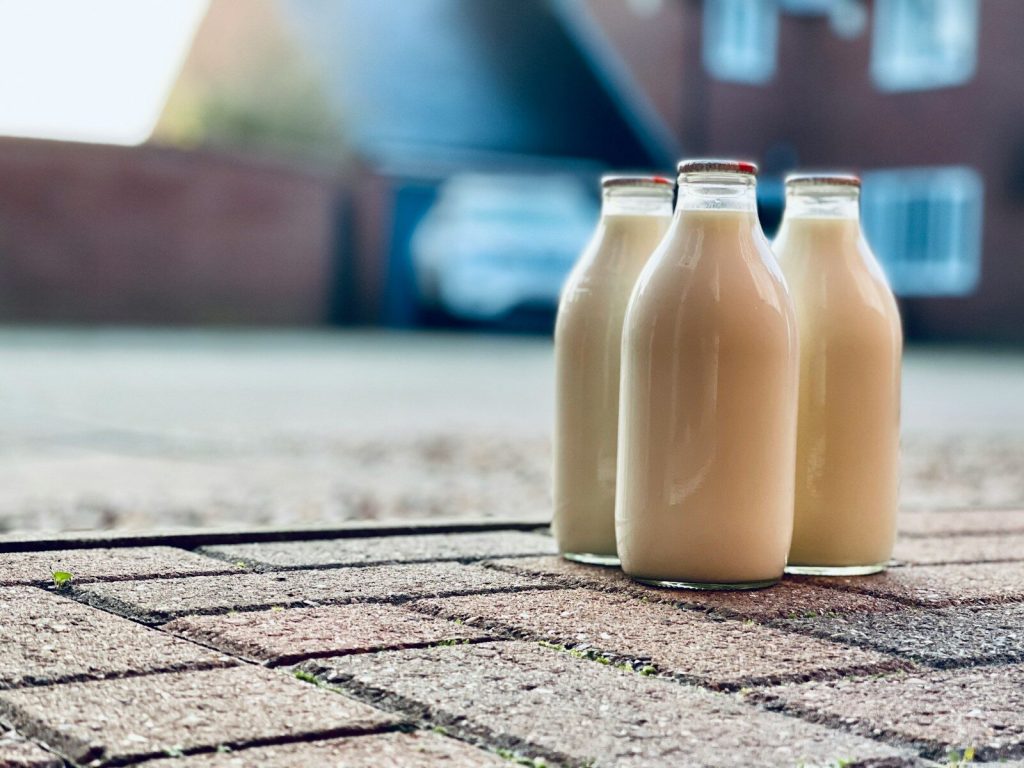
Home services are having a comeback too. Many people are rediscovering milk rounds, especially as packaging waste becomes harder to ignore. Glass bottles that are collected, cleaned, and reused can significantly cut single-use plastic, and, when milk delivery connects you with nearby dairies, it often shortens the supply chain as well.
If you’re sticking with supermarkets, there’s still plenty you can do. Look for clear labelling around organic standards, animal welfare, and sourcing. Some brands invest in lower-impact farming or better packaging, but it’s worth reading beyond the front of the carton. Small details, like where the milk was processed or whether the packaging is fully recyclable, can help you make choices that align more closely with your values.
Exploring milk alternatives
Plant-based milks have moved well beyond a niche shelf. You’ll find them everywhere now, each with its own flavour, texture, and environmental footprint. That choice can feel overwhelming at first, but a quick sense of what each option offers makes it far easier to pick something that suits your routine.
- Oat: A solid all-rounder. It tends to use less water, can be grown in the UK, and gives you that creamy finish that works well in tea and coffee.
- Almond: Often lighter in carbon emissions, though almonds need a fair amount of water to grow, so sourcing matters.
- Soy: High in protein and relatively efficient to produce, making it a practical, balanced option for everyday use.
- Coconut: Smooth and slightly sweet, with low pesticide use, but it usually travels a long way to reach UK shelves.
- Rice: Mild and easy to drink, though it does come with higher water demands than some other alternatives.
- Hemp: A bit of a dark horse. It grows easily, needs fewer inputs, and has a subtle nutty taste.
Your greener choices depend on how they fit into your habits. Trying one or two new options can shift your overall impact without making your routine feel unfamiliar.
Everyday tips for greener dairy habits
Sustainability tends to stick when it blends into what you already do. Start with the obvious and then go a step further. If milk regularly goes off in your fridge, buy smaller amounts more often, or freeze (yes, you can do that) what you won’t use straight away.
Containers are another easy win. Reusable bottles, refill points, or even just choosing larger formats can reduce how much packaging you cycle through each week. If you’ve got access to a local refill scheme, it’s worth trying once – you might find it becomes second nature!
Have a look at labels, too. Terms like “organic” or “locally sourced” can mean different things depending on the brand. A quick scan of where the milk comes from or how it’s packaged often tells you more than the headline claim.
And lastly, it helps to stay flexible. Your small switches don’t need to be perfect to count.